Sunday, February 21, 2016

Sunday Drive: Curreys and Neals

A further search on my part has brought to light another shot of the Neal's 1948 Plymouth "Woodie" station wagon, this time with Jimmy behind the wheel, his wife Jessie and one-year-old me standing with Bernice Grenfell Currey (the mother who raised me).  

[Compton, California 1949, from my personal collection]


If you'd like to see what a similar car would cost you these days, look here.


© 2016 Copyright, Christine Manczuk, All Rights Reserved.

Fantastic Find: CSI: Dixie

Here's the site's simplest description of what it contains: "CSI: Dixie collects 1582 coroners reports from six South Carolina counties for the years 1800-1900." The counties include Anderson County, Edgefield County, Greenville County, Kershaw County, Spartanburg County, and Union County.

Put together by historians at the University of Georgia as a part of their ehistory project which seeks "not merely to reach a broader public but to involve a broader public."

[Unitarian Cemetery, Charleston South Carolina Gateway Walk, 2008. My photo.]


If your ancestors lived in one of those six South Carolina counties, you just might find familiar names mentioned in the records and you're welcome to share what you know:
"For all its focus on the dead, then, CSI:D is a living project, inviting users to contribute photos, documents, leads, and details in the cases of 1582 unfortunate souls. Unlike a book, which seeks to be the last word on a subject, CSI:D is just the first word; it is an appeal to the public to join an ongoing investigation."
And even if you don't happen to have anyone from those counties, the site provides a useful description of the history and role of coroners and their juries in the 19th century South.

Hat tip to Erik Loomis of Lawyers, Guns & Money blog.

© 2016 Copyright, Christine Manczuk, All Rights Reserved.

Saturday, February 20, 2016

Fantastic Find: FamilySearch Wiki's Genealogy Research Forms


I have not quite settled on a systematic way of documenting my research, such as a dedicated research log.  Most of my research record can be found on my Ancestry tree, taking the form of sources added automatically when I add records and also any stories I create as well as notes/comments I make on any given profile.  I've also toyed with Evernote and Google Drive spreadsheets.

Part of my personal mission this year to improve my genealogy process.  If I ever do this line of work professionally I will have to be able to systematically go through relevant sources quickly.  The Shiny Bright Object way won't cut it!  That's for after hours fun.

The FamilySearch wiki page on Genealogy Research Forms has a great compilation of research forms, from census blank forms to family group sheets to research trackers.  Just going through the forms this afternoon has fired up my imagination on what I can do going forward.

In a somewhat related note, Travis LeMaster's post ""Building My 2011 Research Template"" at TJL Genes: Preserving Our Family History also appealed to me for it's systematic approach (here is an example of one of LeMaster's ancestors Edmund G. Pierce evaluated with that template).  I might just start with this approach, coupled with the timeline that Ancestry automatically generates when I do a particular ancestor's post.


© 2016 Copyright, Christine Manczuk, All Rights Reserved.

Friday, February 19, 2016

Family Friday: Webb/Slater

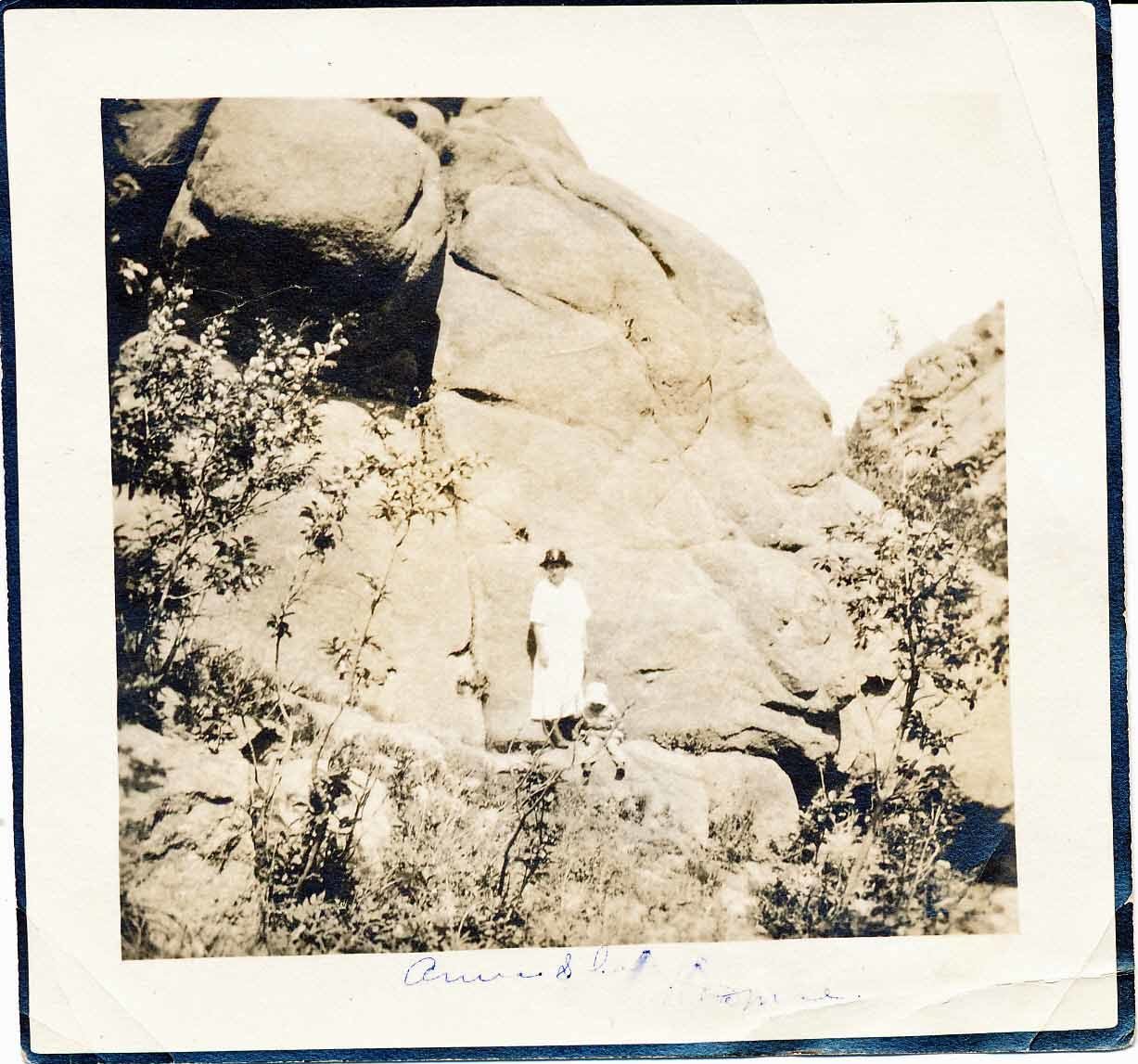
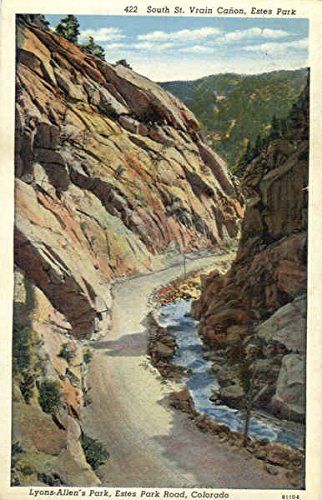
One day in 1918 my grandparents Anna (Webb) and Harry Slater took their year-old daughter Alta Mae (my mother) on a drive through South St. Vrain Canyon and along the way they stopped for this photo. The canyon is about 8 miles north of their home in Niwot and nowadays it takes about 15 minutes to make the trip; I'm sure it took them much longer longer then.

[Courtesy of Olive Slater-Kennedy]


Named for Ceran St. Vrain, a successful fur trader in early Colorado history, this scenic canyon is still a popular place to visit, especially for climbers, hikers and motorcyclists.


Starting at 4:20 in this video, here's a recent ride through the canyon.

[Colorado Motorcycle Trip: South St. Vrain Canyon by Robert Merz, 2013.]


© 2016 Copyright, Christine Manczuk, All Rights Reserved.

Thursday, February 18, 2016

Throwback Thursday: Mickey, My First Favorite Cat

I think I had just received a toy dog as a birthday present (so picture is probably about September 1973).  Notice Mickey to the left.  All pictures from my personal collection.

Mickey would follow me all over the yard.  Here we are, abt 1972.


I guess she'd had enough of my water-pouring activity.


© 2016 Copyright, Christine Manczuk, All Rights Reserved.
Wednesday, February 17, 2016

Gone for Soldiers: Samuel L. Avery (1790 - 1853), Soldier

This paternal third great grandfather was born in Cumberland County, North Carolina, but grew up across the border in Chesterfield County, South Carolina, where his family moved when he was very young.

[In 1814 Chesterfield was in the Cheraw District (outlined in blue in this map). The State of South Carolina: from the best Authorities, By Samuel Lewis. W. Barker, sculp. Source: David Rumsey Historical Map Collection.]


And that's where Samuel L. Avery and Mary Thornton were married on June 18, 1808. Two years later he appears at the top of the first of these two pages from the 1810 U.S. Census. (Note that his surname is spelled Avera here; the shift to using Avery appears to have occurred a few years later.)

[Year: 1810; Census Place: Chesterfield, Chesterfield, South Carolina; Roll: 60; Page: 571; Image: 00293; Family History Library Film: 0181419. Ancestry.com. 1810 United States Federal Census [database on-line]. Provo, UT, USA: Ancestry.com Operations, Inc., 2010. Images reproduced by FamilySearch. Original data: Third Census of the United States, 1810. (NARA microfilm publication M252, 71 rolls). Bureau of the Census, Record Group 29. National Archives, Washington, D.C.]


Sources* agree that Samuel, together with two of his younger brothers, Thomas and William, served as privates in the 3rd (Alston's) South Carolina Militia. during the War of 1812. Here's a general description of the role played by South Carolina's troops:
"The troops in the War of 1812 were basically of two kinds - the regular army, known as regulars, and the militia. The regulars were entirely volunteers. All men belonged to the militia, but not all militias were called into service. Those who were actually enrolled were known as the detached militia; they were obtained preferably by volunteers from the total militia or by conscription if not enough volunteered. The militia in the past had been thought of as a body of men only used for home defense, but in the War of 1812 they were not only used at home but were also sent out of the state to aid at other danger points."
Samuel's name is also on the 1814 muster rolls for Craven County, South Carolina, but it appears that he could afford to hire a substitute.

[Section: Muster roll of the detached militia, organized in August, 1814. Ancestry.com. Muster rolls of the soldiers of the War of 1812 : detached from the Militia of North Carolina in 1812 and 1814 [database on-line]. Provo, UT: Ancestry.com Operations Inc, 2005. Original data: Muster rolls of the soldiers of the War of 1812 : detached from the Militia of North Carolina in 1812 and 1814. Raleigh, N.C.: C.C. Raboteau, 1851.]


[Pitt County Genealogical Quarterly, August 1996, page 4. Copyright Pitt County Family Researchers. This item is presented courtesy of Farmville Public Library for research and educational purposes only.]


Department of the Army Pamphlet,  Leonard L. Lerwell, 1954. (PDF)]


By 1819 the Avery family had left South Carolina for Alabama and moved on to Winston County, Mississippi, by 1835 where my great great grandfather John Warren Avery was born.


*Two online sources are South Carolinians in the War of 1812 and Alston's 3rd Regiment SC Militia on RootsWeb.


© 2016 Copyright, Christine Manczuk, All Rights Reserved.
Tuesday, February 16, 2016

I'm Taking the Family Tree University "Genetic Genealogy 201" Starting Next Week

This course is offered by Family Tree University.


This is the syllabus summary.


This is a 4 week course but it is at your own pace.  I am especially interested in their Lesson 3 that appears to focus on using GEDmatch.


© 2016 Copyright, Christine Manczuk, All Rights Reserved.